
Every PM’s bookshelf ends up the same way: a dozen books bought with good intentions, half of them finished, and no clear memory of which one actually taught you something.
This list is built to avoid that. Instead of “100 books every PM must read,” the best product management books here are sorted by what you need right now: understanding the job, preparing for an interview, solving a strategy problem, or managing people for the first time. Find your stage, pick two or three of these product manager books, and finish them before you buy more. If you want the full path these books fit into, our guide on how to learn product management covers it from start to finish.
There are hundreds of books about product management, so don’t try to read them all. There are two ways in. If you know your stage, jump to the matching section. If you’d rather answer a question, use the flowchart: pick what you’re trying to do, such as build great products or become a manager, and follow the arrows to the right book.
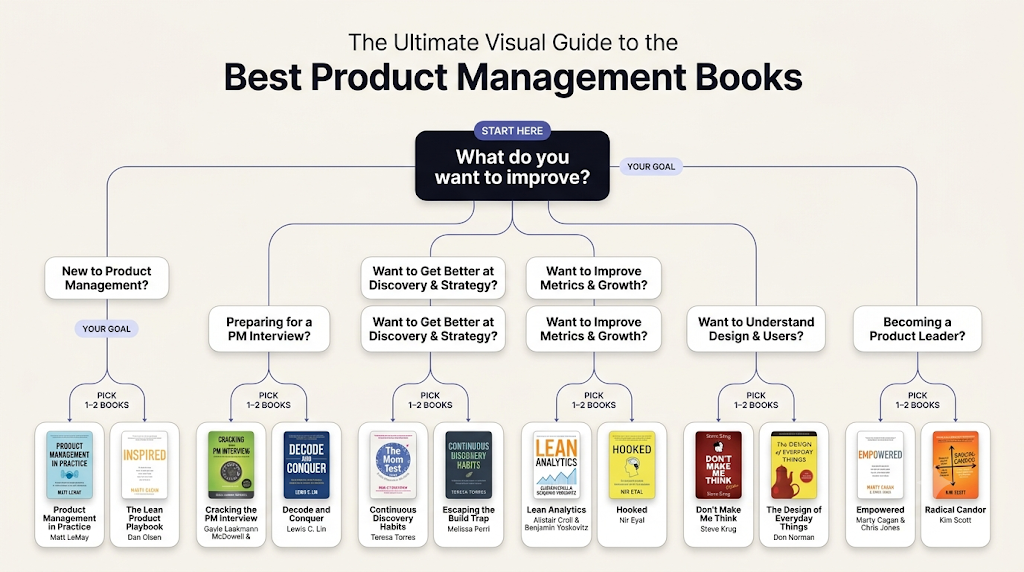
Either way, the rule is the same: two or three books finished properly beat ten books skimmed. The plan near the end of this page shows the order we’d read them in.
New to product work? Start here. These books explain what the job is and how good teams work.
by Marty Cagan
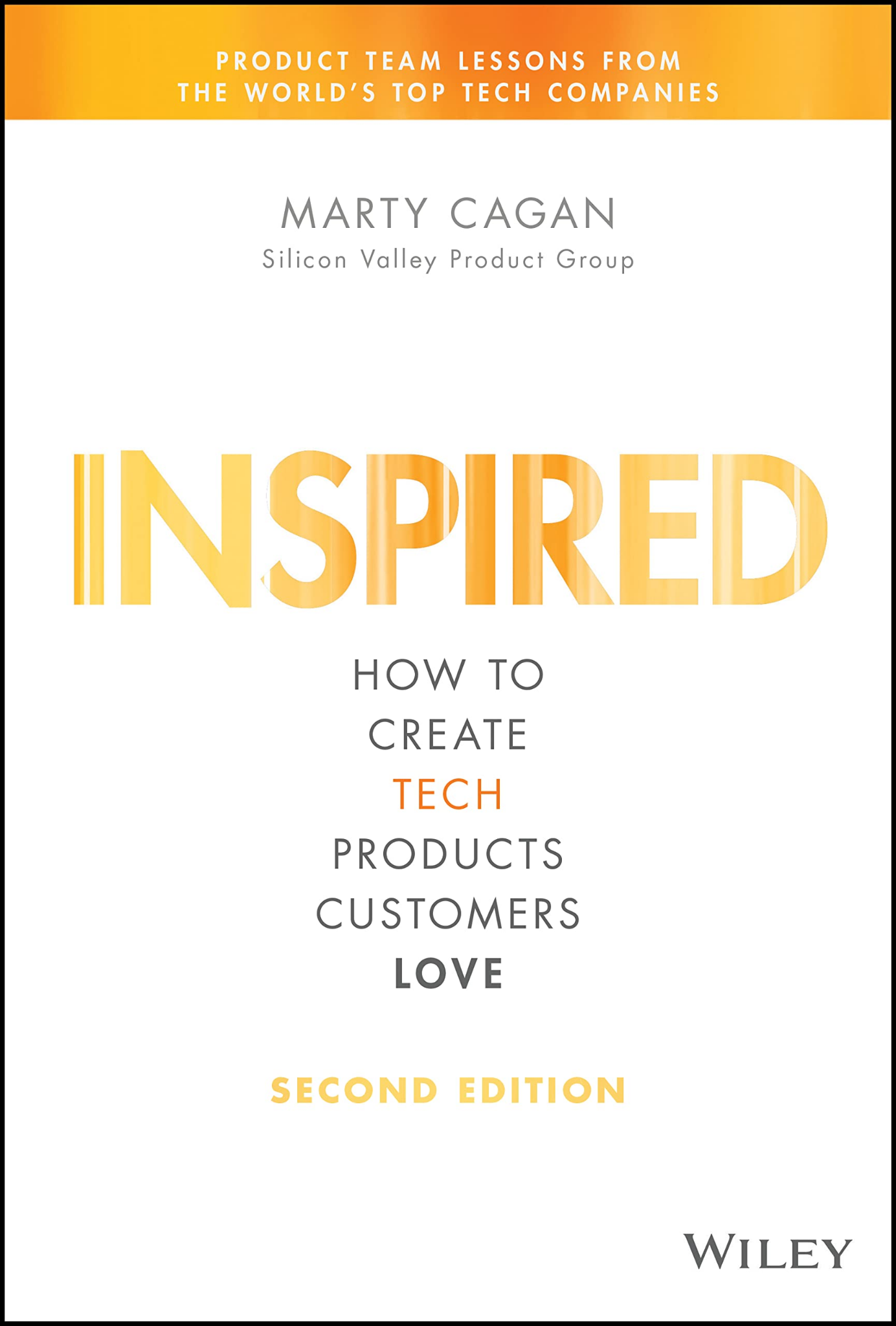
If this list had to shrink to one book, it would be Inspired. It’s the closest thing product management has to a shared language, so reading it first makes everything else easier to follow.
Who it’s for: anyone starting out, and anyone who has never had a clear picture of what great product teams do differently.
What you’ll learn: how strong product teams decide what to build, why the best ones care about results for customers and not just the number of features shipped, and how to test an idea before spending months on it.
Why it matters: many other books on this list assume you’ve read it. Start here and the rest click faster.
by Matt LeMay
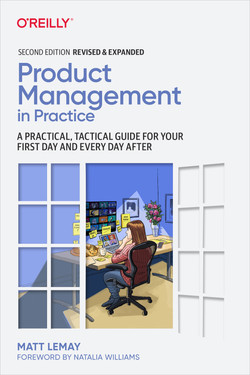
Skip the theory for a moment and see what the job looks like on an ordinary Tuesday. This is a practical guide, not a book of big ideas, and it’s closer to real life than most “intro to PM” content.
Who it’s for: people about to start their first PM job, or who have just started.
What you’ll learn: how PMs really spend their days: talking to people, building trust and making decisions when nobody has all the answers.
Why it matters: many newcomers picture a job that doesn’t match reality. This book closes that gap before you’ve spent months learning it the hard way.
by Dan Olsen
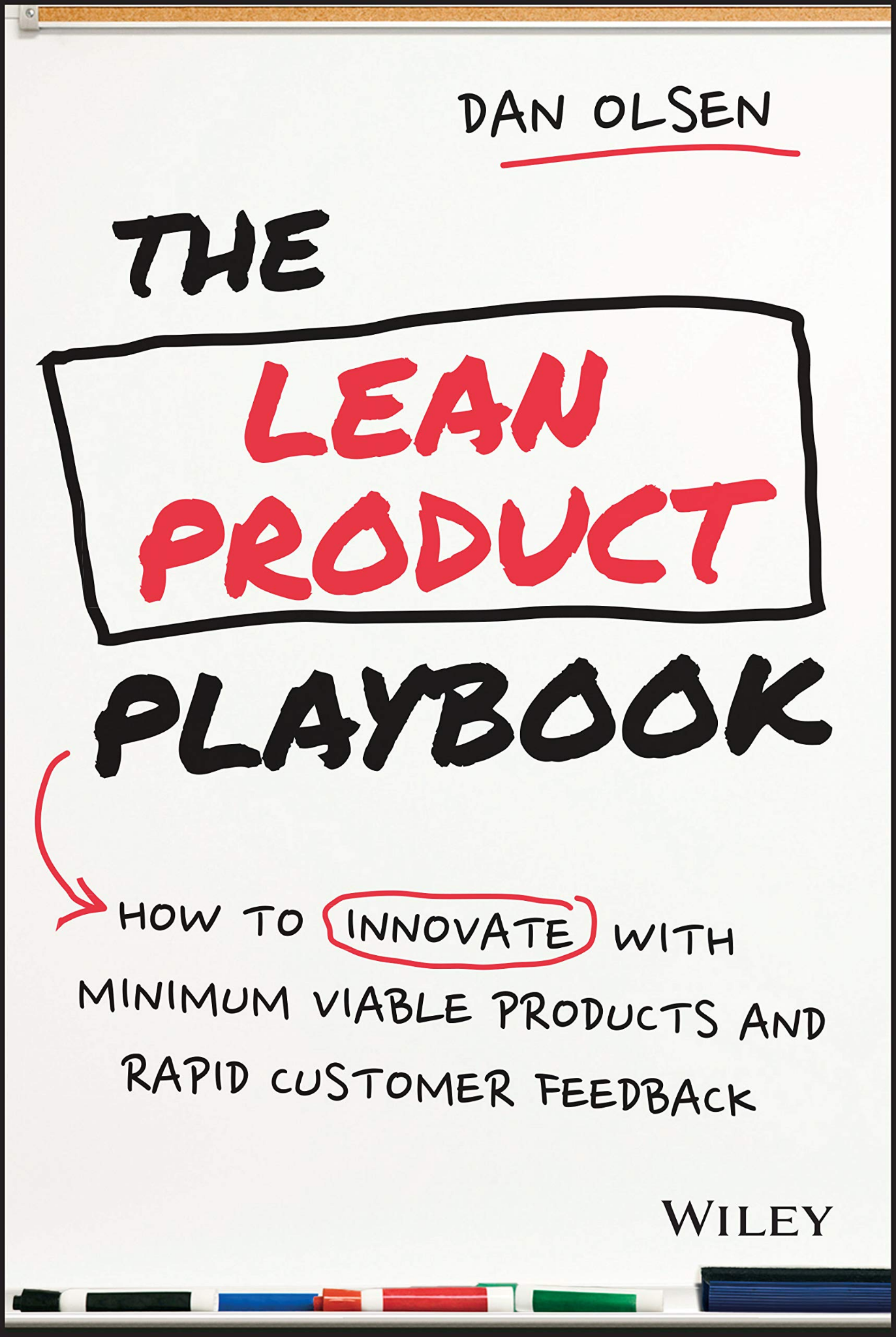
This one gives you steps to follow, not just a philosophy to absorb. It walks you through finding your customer, working out what they need that isn’t being met, and checking that your idea works before you build it.
Who it’s for: readers who like a clear process, and anyone stuck on what “build something people want” means in practice.
What you’ll learn: how to pick a target customer, spot unmet needs and test a solution cheaply before building it.
Why it matters: building something people truly want (often called product-market fit) can feel vague. This book turns it into a checklist you can run.
by Jackie Bavaro and Gayle Laakmann McDowell
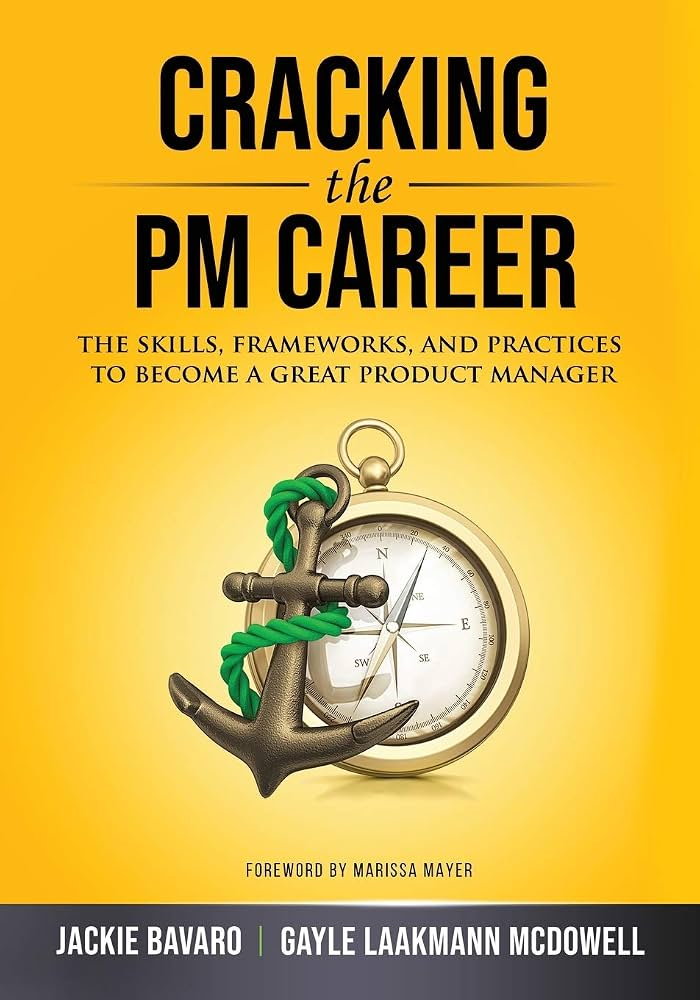
This book isn’t about interviews. It’s about the job itself, and how it changes between a small startup and a large company.
Who it’s for: people deciding whether PM is right for them, switching companies, or wondering what comes after their current title.
What you’ll learn: how the PM role differs by company size and specialty, and what moving up in the career really looks like.
Why it matters: knowing where you’re heading helps you choose which skills to build first.
These are the best books for product management interview preparation: one for the main question types, and one for product design questions. Reading is only half the job, so pair them with real practice, like our PM interview questions with answers.
by Gayle Laakmann McDowell and Jackie Bavaro
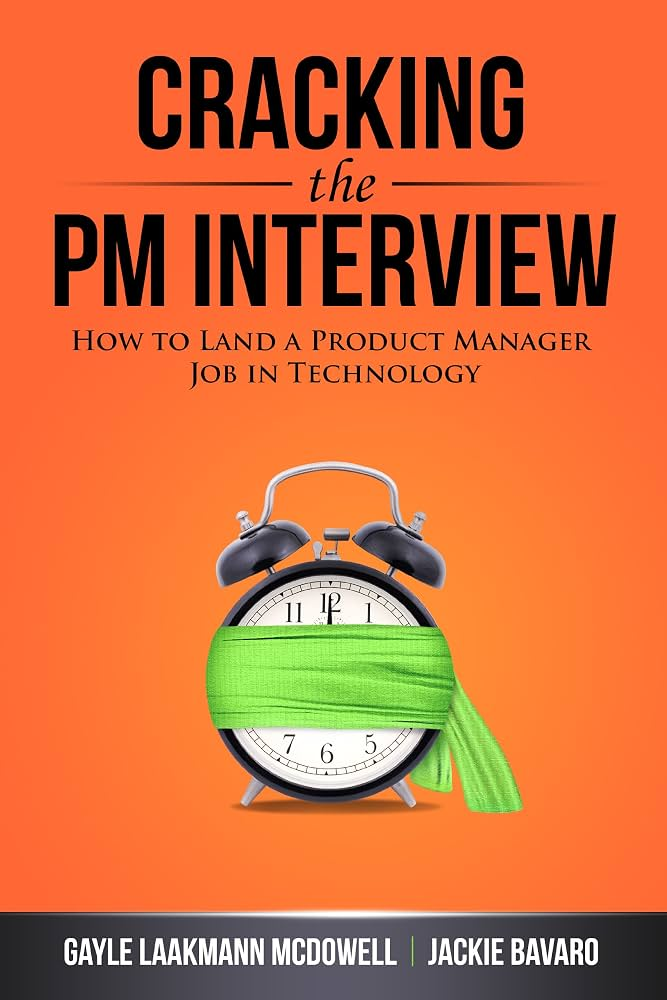
One of the most popular PM interview books. It explains the questions you’ll face and how to structure your answers.
Who it’s for: anyone with a PM interview in the next few months.
What you’ll learn: how to handle product design questions, estimation questions (“how many of X are there in Y?”) and questions about your past work, with example answers. Short on time? Start with our Cracking the PM Interview summary.
by Lewis C. Lin
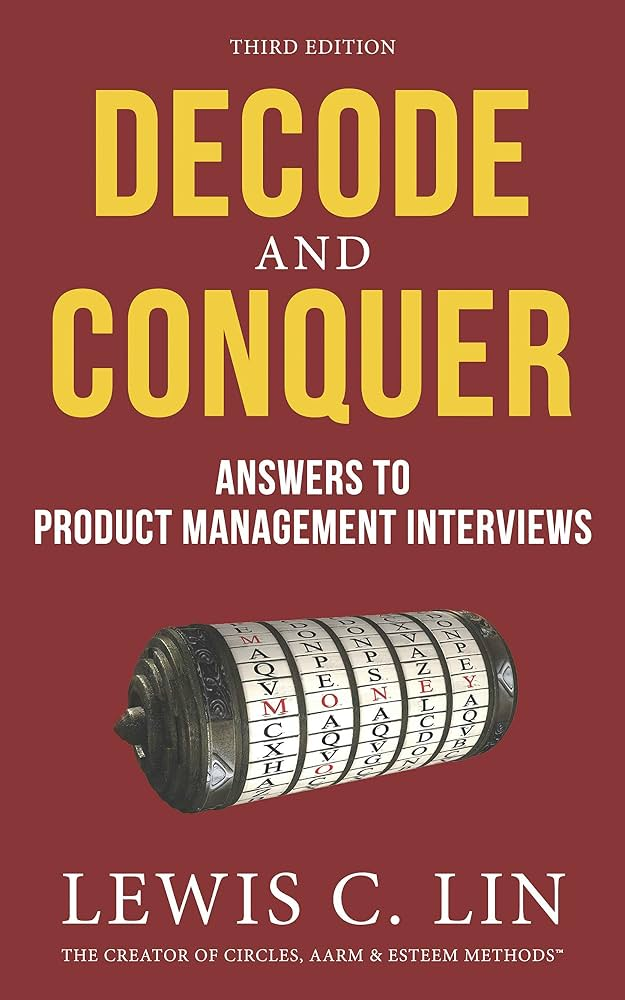
This is where the CIRCLES method comes from, a step-by-step way to answer product design questions out loud.
Who it’s for: candidates who freeze on “design a product for X” questions.
What you’ll learn: a repeatable way to answer, from clarifying the problem to weighing the trade-offs. Reading a method isn’t the same as using it live, so practise with our product management case studies.
These product strategy books for product managers help you decide what to build, and check that it’s worth building. “Discovery” simply means finding out what customers need before you build.
by Melissa Perri
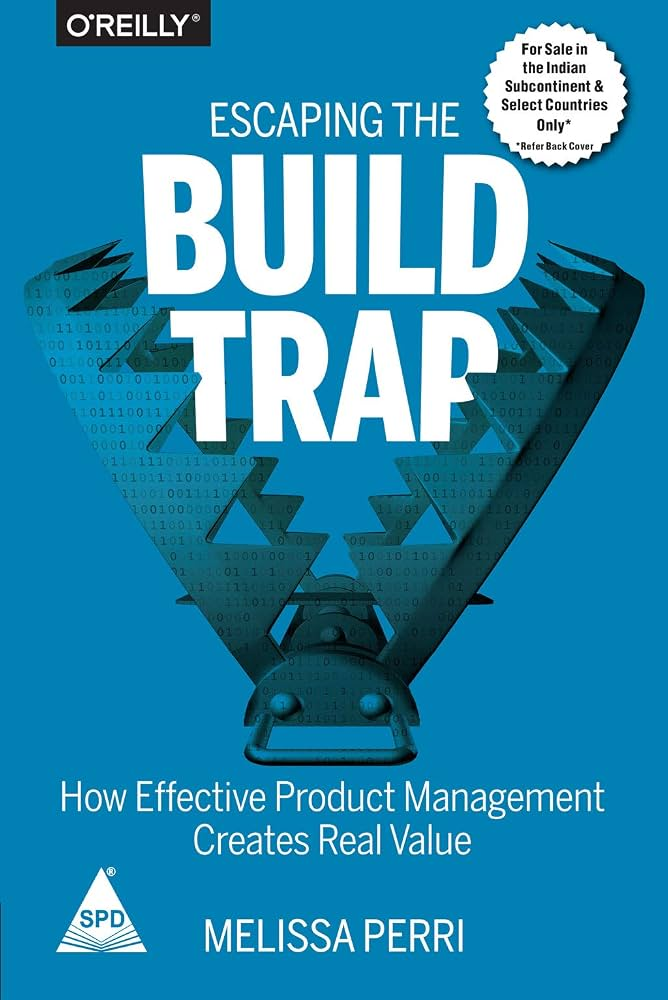
A book that changes how you see your own team. It names a common failure: shipping new features all the time while nothing important actually improves.
Who it’s for: PMs moving from carrying out tasks to shaping direction.
What you’ll learn: how to spot teams that measure success by what they ship, and how to shift attention to the results customers and the business actually get.
by Teresa Torres
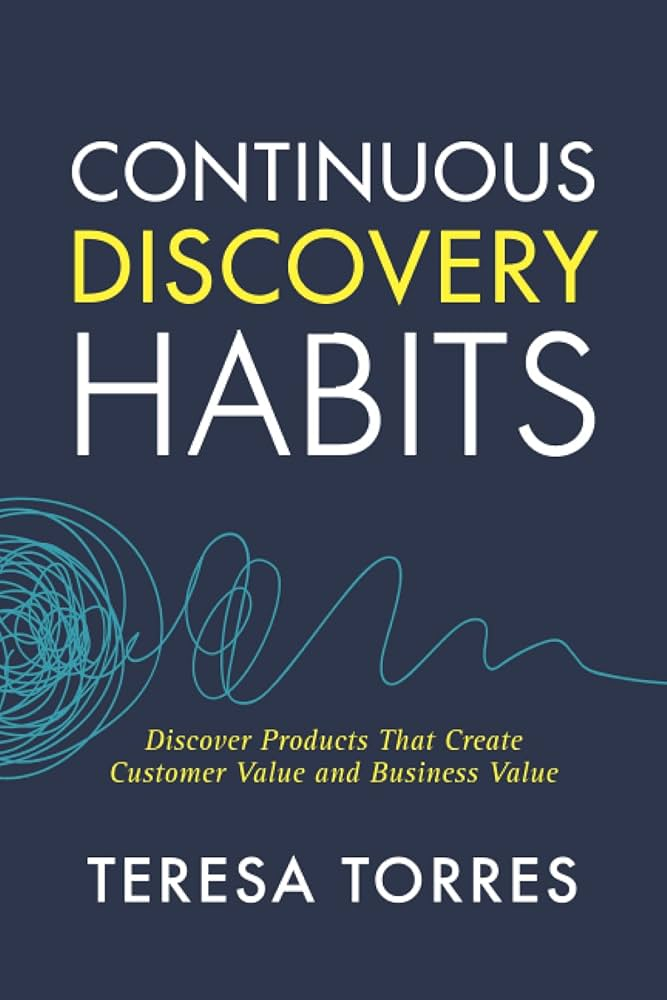
Turns discovery from a one-off step before building into a weekly habit. It includes a simple diagram that links your goal, customer problems and ideas.
Who it’s for: PMs who know why customer research matters and want a routine for doing it.
What you’ll learn: how to talk to customers every week, find real problems and test your assumptions as you go.
by Rob Fitzpatrick
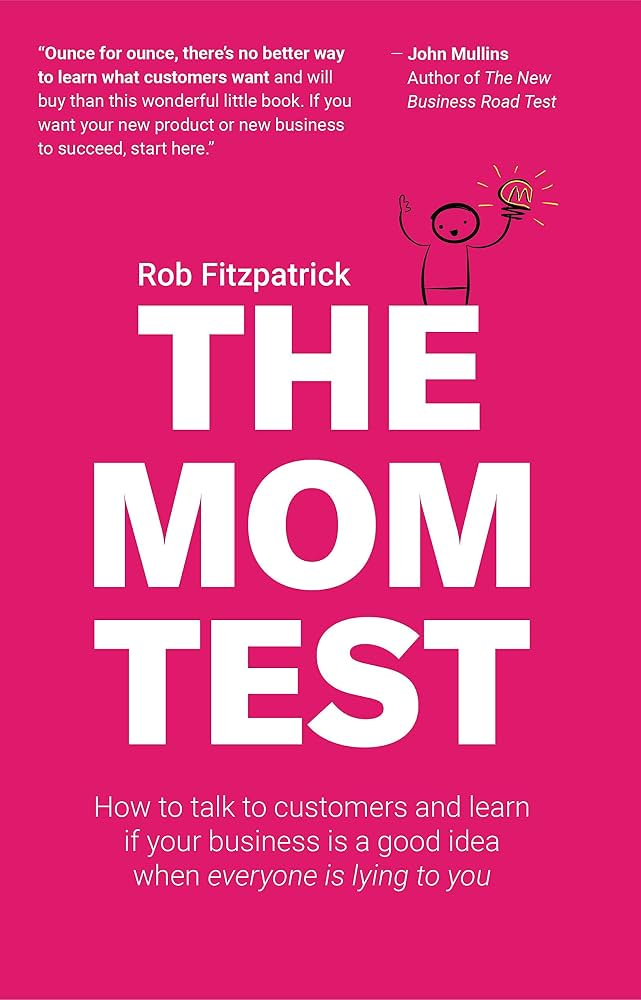
Short, sharp and useful from day one. It answers one question: how do you ask people about their problems without nudging them to say what you want to hear? The name comes from the fact that even your mum will say your idea is great, if you ask the wrong way.
Who it’s for: Anyone about to run customer conversations.
What you’ll learn: How to run a conversation that gets honest answers, not polite encouragement.
Numbers are part of the job, even if you’re not a data person.
by Alistair Croll and Benjamin Yoskovitz
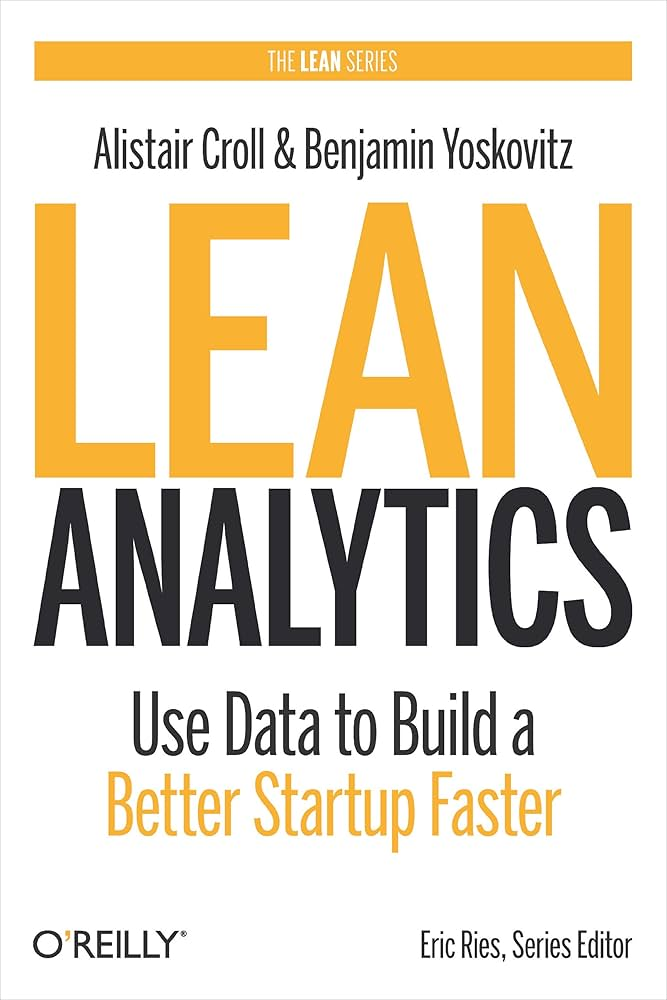
Built on a simple idea: at any stage of a business, one number matters most, and most teams track twenty instead.
Who it’s for: PMs who feel buried under dashboards.
What you’ll learn: which number to focus on at each stage, from a brand-new product to a growing one.
by Nir Eyal
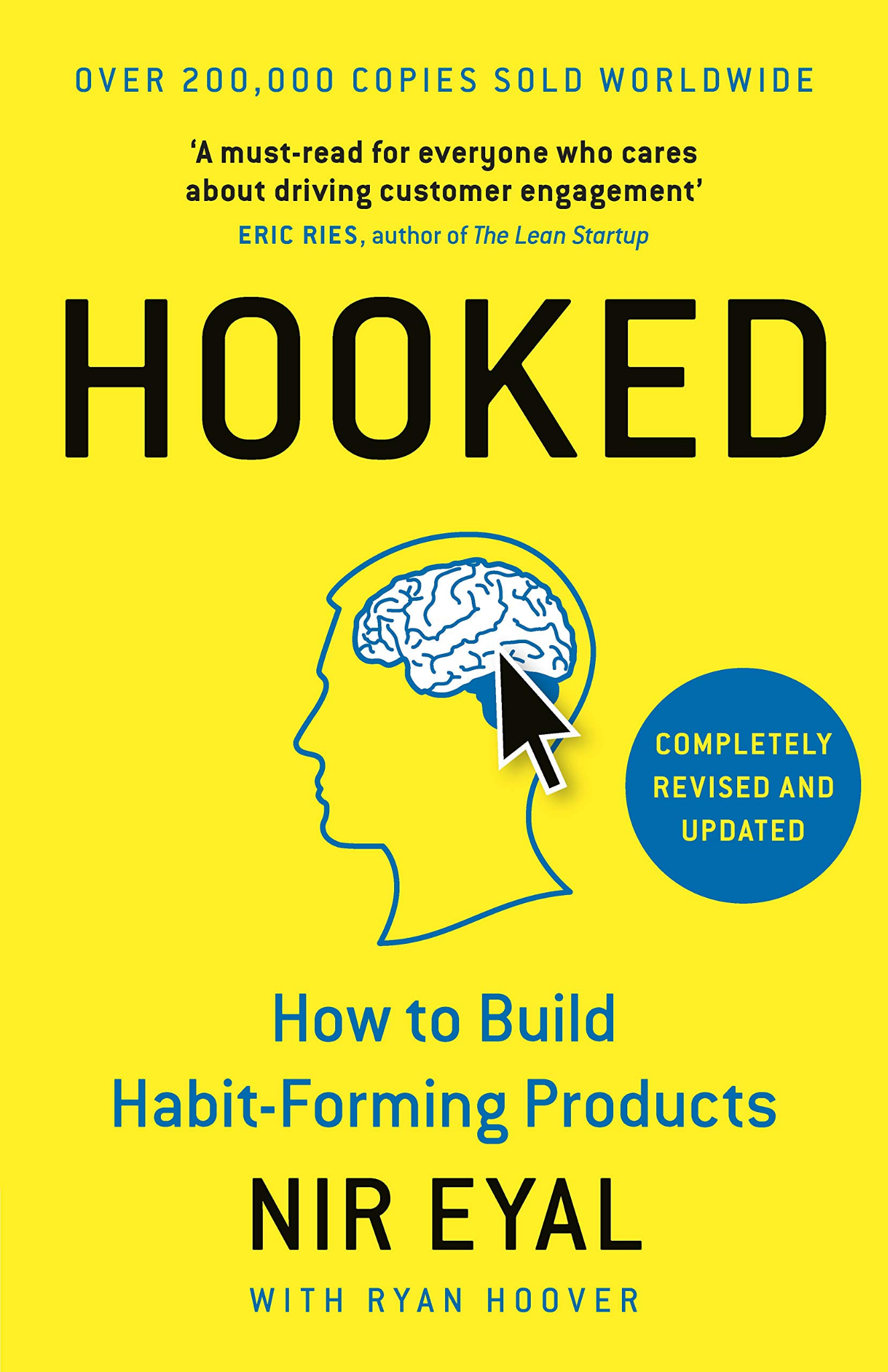
The best-known book on how products become habits. It describes a four-step loop: something prompts you, you take a small action, you get a reward that’s a little unpredictable, and you put something in that brings you back.
Who it’s for: PMs working on apps people use again and again.
What you’ll learn: why some products stick, and how that loop is designed. Read it critically: whether it’s right to build products that hook people is an open debate, and this book sits at the centre of it.
Good design isn’t only for designers. These two books help you notice when a product is confusing.
by Steve Krug
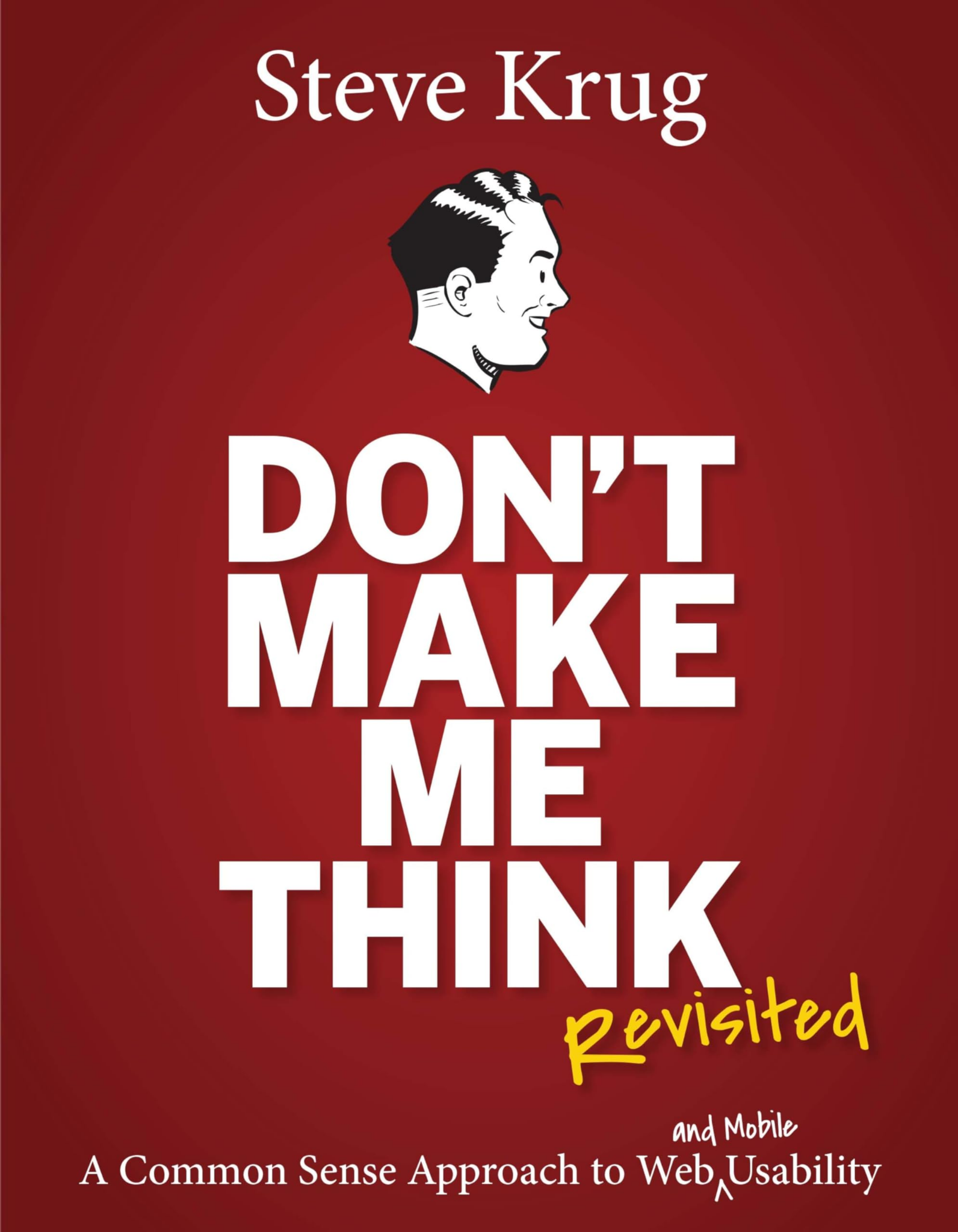
A short classic that has aged well. Its main idea: most usability problems come down to one thing, the user had to stop and think when they shouldn’t have.
Who it’s for: anyone, no design background needed.
What you’ll learn: how to spot small bits of friction on a screen before people reach the value underneath.
by Don Norman
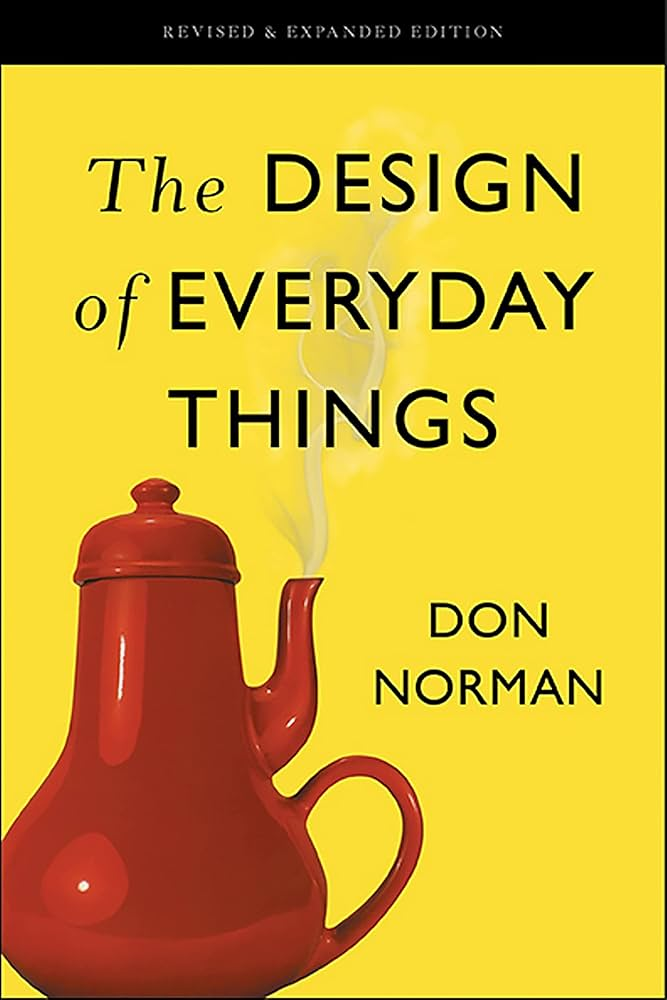
Broader than software, and the base of much modern thinking about design. It explains why objects succeed or fail depending on how well they match the way people naturally think.
Who it’s for: PMs who want to understand why some products feel obvious and others don’t.
What you’ll learn: ideas like clear cues (a door handle that tells you whether to push or pull) and feedback (a sign that your action worked), and why they matter in apps too.
Once people start looking to you for direction, the skills change. These two books help.
by Marty Cagan with Chris Jones
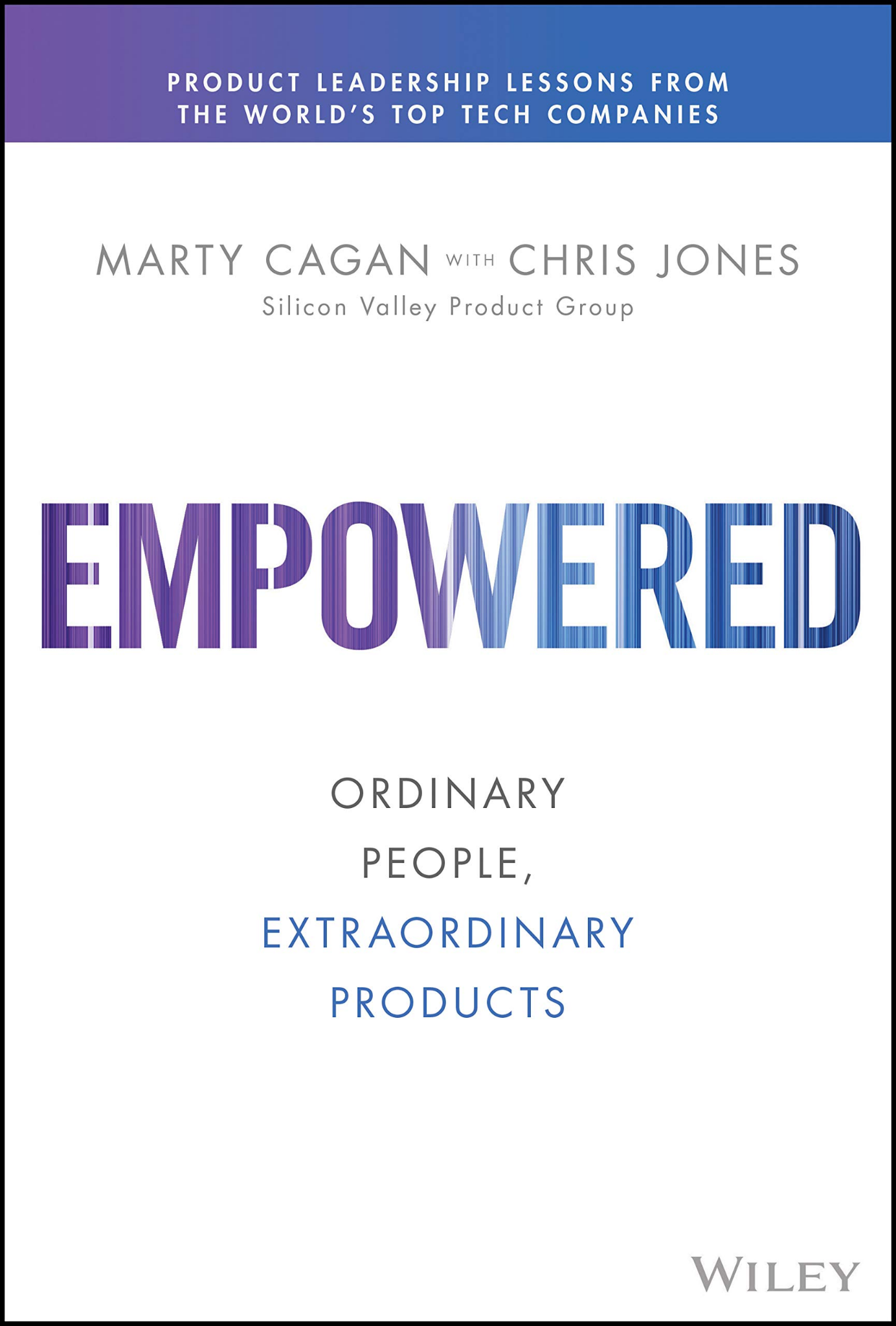
Who it’s for: PMs who have started managing people, or are about to.
What you'll learn: How to coach, empower, and build genuine ownership in a product team rather than micromanaging output.
Why it matters: The natural next step once you've internalized Inspired and find yourself responsible for other people's work, not just your own.
by Kim Scott
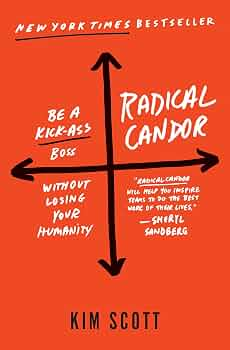
Not written only for PMs, but useful the moment you’re responsible for someone else’s growth. The core idea: care about people personally, and challenge them directly. Easy to say, hard to do.
Who it’s for: anyone managing even one person.
What you'll learn: How to give honest, useful feedback without either softening it into uselessness or delivering it so bluntly it damages trust.
Why it matters: A leadership book that applies the moment you have even one person looking to you for direction.
Want to hear from people doing the job? Browse our 100 product managers profiles.
Built from the experience of PMs at Swiggy, Razorpay, Mixpanel and Zeta. It covers how to break into product management, how to build something new from scratch and how to take a product to market. Download The Ultimate Product Management Guide.
The most common PM questions, answered by practitioners at Amazon, Microsoft, Booking.com and Razorpay, including founders and principal PMs. Get the Product Stories ebook.
Product-led growth means the product itself brings in and keeps customers. This ebook covers the main approaches, when each one fits as a company grows, and how to decide which customer questions to study first, with input from people who have worked at Swiggy, Ola, Booking.com and Netcore. Get the Product-Led Growth book.
Buying ten books at once and reading none of them properly is the single most common way this list gets wasted. Here's a pace that actually works.
Add Empowered and Radical Candor once you move into any kind of leadership responsibility, and Navigating the Product Galaxy or Cracking the PM Career whenever you want a wider-angle view of the role itself. Neither is urgent before that point.
Inspired by Marty Cagan is the best starting point for most people. It gives you the vocabulary and ways of thinking that most other PM books build on, which is why it tops our list of the best books for product managers at any stage. If you’re looking for the best product management books in India, the same titles apply, and our free ebooks above add a local view from PMs at Indian companies like Swiggy and Razorpay.
Read Cracking the PM Interview for the main question types and Decode and Conquer for product design questions. These are the best books for product management interview prep, but reading alone isn’t enough. Practise with real questions, out loud, before the day.
No. Books give you the vocabulary and ways of thinking, but hiring decisions are based on how well you reason in case studies, portfolios and interviews. Books are the input; practice is what prepares you. Our free product management courses and product management case studies are where that practice happens.

.avif)

.avif)
.avif)

.svg)
.svg)
